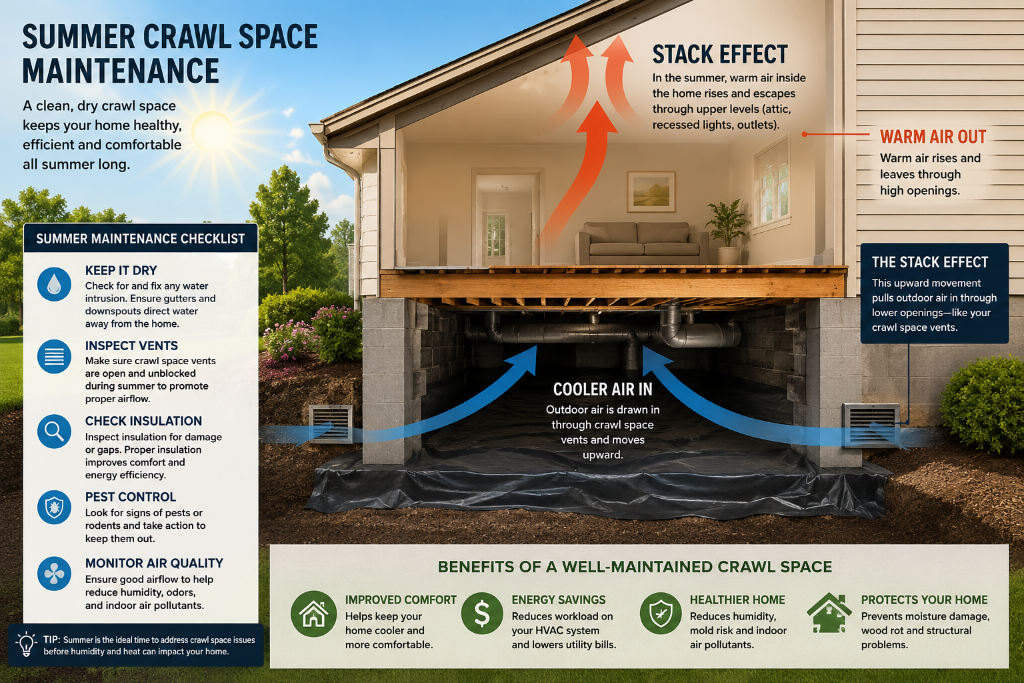
Why Summer Is the Most Critical Season for Your Home
Summer in Middle Tennessee is beautiful, but it's also the season when your home faces its greatest challenges. From June through September, temperatures routinely climb into the 90s while humidity levels hover above 70% for weeks at a time. That combination of heat and moisture creates the perfect storm for crawl space problems, mold growth, and structural stress.
Your home works harder in summer than any other season. Your HVAC system runs constantly, your crawl space battles ground moisture and condensation, and your foundation sits on clay soil that shifts with every rainfall and dry spell. Without a proactive summer maintenance plan, small issues can escalate into costly repairs by fall.
This guide covers the essential summer maintenance tasks every Middle Tennessee homeowner should prioritize, with a special focus on the areas most vulnerable to our regional climate, your crawl space, foundation, and indoor air quality.
1. Inspect and Protect Your Crawl Space
Your crawl space is ground zero for summer moisture problems. In Middle Tennessee, the combination of high outdoor humidity and warm temperatures means that any unsealed crawl space becomes a breeding ground for mold, wood rot, and pest activity. Here's what to check:
Check Your Vapor Barrier
If your crawl space has a vapor barrier, inspect it for tears, sagging, or gaps at the seams. Even small rips allow ground moisture to bypass the barrier entirely. In our humid climate, a compromised vapor barrier can allow gallons of water vapor to enter your crawl space each week.
If your barrier is thin (under 12 mil), torn, or more than 10 years old, it's time to consider an upgrade. A professional 20-mil reinforced vapor barrier with sealed seams provides dramatically better protection and lasts for decades.
Measure Crawl Space Humidity
Purchase a simple hygrometer and place it in your crawl space. Ideally, humidity should stay below 55%. If readings climb above 60%, you're in the danger zone for mold and wood decay. Above 70%, active mold growth is almost guaranteed.
If humidity is elevated, check whether your dehumidifier is running properly, or consider having one installed. A commercial-grade dehumidifier sized for your crawl space is one of the best investments you can make in a humid climate like ours.
Look for Standing Water
After a summer thunderstorm, check your crawl space for standing water or damp patches. Even small amounts of water indicate drainage problems that need attention. Standing water rots wooden joists, attracts pests, and accelerates mold growth.
If you find water, the issue could be poor grading around your foundation, clogged gutters, or a missing or failed sump pump. Addressing water intrusion early prevents thousands of dollars in structural damage.
2. Clean and Maintain Your Gutters and Downspouts
Summer thunderstorms in Middle Tennessee can dump inches of rain in a single afternoon. If your gutters are clogged with spring debris, that water cascades directly against your foundation and into your crawl space.
- Clean gutters at least twice during summer, especially after heavy storms
- Check downspouts to ensure they extend at least 4 to 6 feet away from your foundation
- Inspect for sagging or loose gutters that may not channel water properly
- Consider gutter guards if debris is a recurring problem
Proper water management around your home is the single most effective way to prevent crawl space moisture and foundation issues. Every gallon of water that your gutters redirect away from your foundation is a gallon that never enters your crawl space.
3. Check Your Foundation for Signs of Stress
Middle Tennessee's clay soil expands when wet and contracts during dry spells. That constant movement stresses your foundation and can lead to cracks, settling, and structural issues. Summer is an ideal time to inspect your foundation because the ground is typically dry enough to reveal any settling that occurred during the wet spring months.
Walk around your home's exterior and check for:
- New or expanding cracks in foundation walls or brick veneer
- Gaps around windows or doors that weren't there before
- Sticking doors that suddenly won't close properly
- Sagging or bouncy floors inside the home
If you notice any of these signs, schedule a professional inspection. Foundation problems only worsen over time, and early intervention is almost always less expensive than waiting.
4. Service Your HVAC and Check Ductwork
Your HVAC system works overtime in summer, and if your ductwork runs through your crawl space, there's an important connection to consider. Leaky or uninsulated ductwork in a humid crawl space creates condensation, which drips onto wood and insulation, creating perfect conditions for mold growth.
- Replace air filters monthly during peak summer usage
- Have your system professionally serviced if you haven't already this year
- Check ductwork in the crawl space for obvious leaks, disconnected joints, or missing insulation
- Look for condensation on ductwork or pipes, which signals high humidity
If your ductwork shows signs of condensation, it's a strong indicator that your crawl space humidity is too high and encapsulation may be needed.
5. Trim Vegetation and Improve Airflow
Overgrown shrubs, trees, and ground cover around your home's perimeter trap moisture against your foundation and block airflow. In Middle Tennessee's humid climate, that trapped moisture finds its way into your crawl space and basement walls.
- Trim shrubs back at least 12 to 18 inches from your foundation
- Remove vines growing on exterior walls, which trap moisture and can damage siding
- Clear debris from around the foundation perimeter
- Check that soil grades away from your home, not toward it
Good airflow around your foundation helps moisture evaporate naturally rather than soaking into the ground around your crawl space walls.
6. Check for Pest Activity
Summer is peak season for pests in Middle Tennessee, and your crawl space is an attractive habitat. Termites, carpenter ants, rodents, and other pests are drawn to moist, dark environments. If your crawl space has high humidity or standing water, it's essentially an open invitation.
Look for signs of pest activity such as:
- Mud tubes on foundation walls (a sign of termites)
- Droppings or nesting materials in the crawl space
- Chewed or damaged vapor barrier material
- Insect activity around vents and entry points
A properly encapsulated crawl space with sealed vents eliminates the conditions that attract pests, serving as a passive but effective layer of protection.
7. Test Your Sump Pump
If your crawl space has a sump pump, summer is when it works hardest. Test it before the heavy storm season hits by pouring water into the sump pit and confirming the pump activates and discharges properly.
- Check the discharge line to ensure it's clear and directs water well away from the foundation
- Consider a battery backup if you don't have one, since summer storms often bring power outages
- Listen for unusual noises that could indicate a failing pump
A failed sump pump during a summer downpour can result in a flooded crawl space within minutes, so don't skip this simple test.
8. Schedule a Professional Crawl Space Inspection
Many summer maintenance tasks are DIY-friendly, but a professional crawl space inspection provides insights that a visual check cannot. At The Crawl Shield, our free inspections include a thorough assessment of your vapor barrier, structural wood, humidity levels, drainage, and any signs of mold or pest activity.
A professional inspection is especially valuable if:
- Your home is more than 15 years old
- You've never had your crawl space professionally evaluated
- You've noticed musty odors, sagging floors, or high indoor humidity
- You're planning to sell your home in the next few years
Early detection of crawl space issues can save thousands of dollars and protect your family's health. Our team serves Murfreesboro, Smyrna, Nashville, Franklin, and communities across Middle Tennessee.
Don't Wait Until It's Too Late
Summer moisture problems don't resolve themselves. Every week that high humidity, standing water, or poor drainage goes unaddressed, the damage compounds. Wood rot spreads, mold colonies grow, and structural components weaken. By the time you notice musty odors or sagging floors upstairs, the damage beneath your home may already be significant.
The good news is that summer is also the best time to act. The weather is dry enough for inspections and repairs, and addressing issues now prevents them from worsening through the fall and winter.
If you're a homeowner in Murfreesboro or anywhere in Middle Tennessee, take an hour this weekend to check your crawl space humidity, clean your gutters, and walk your foundation. And when you're ready for a professional assessment, The Crawl Shield is here to help, with free inspections, honest recommendations, and 25+ years of experience protecting Middle Tennessee homes.
Schedule your free crawl space inspection today by calling 629-295-3603 or visiting our contact page.